DIGITAL TWINS IN OIL & GAS UAE: HOW THE TECHNOLOGY WORKS AND WHAT IT MEANS FOR YOUR OPERATIONS
Digital Twins in UAE Oil & Gas Operations — A 2026 Practical Guide
By 2026, industry analysts estimate that over 50% of major oil and gas operators globally will have deployed some form of digital twin technology across their asset base. In the UAE, where ADNOC has made digital transformation a stated strategic priority and Dubai’s energy infrastructure is actively modernising, digital twins have moved from pilot programmes into mainstream operational deployment.
But for project managers, engineers, and procurement specialists working on UAE energy projects who are not yet deeply familiar with the technology, the term “digital twin” is one of the most overused and least precisely defined in the industry vocabulary. This guide cuts through the noise.
What Is a Digital Twin — Precisely?
A digital twin is a continuously updated virtual model of a physical asset, system, or process that integrates real-time operational data to reflect the current state of the physical entity it represents.
The critical word is “continuously.” A 3D CAD model of a pipeline is not a digital twin. An as-built survey that is updated once during construction is not a digital twin. A digital twin ingests live data — from IoT sensors, inspection records, process historians, and operational systems — and uses that data to maintain a model that reflects what the physical asset looks like and how it is performing right now.
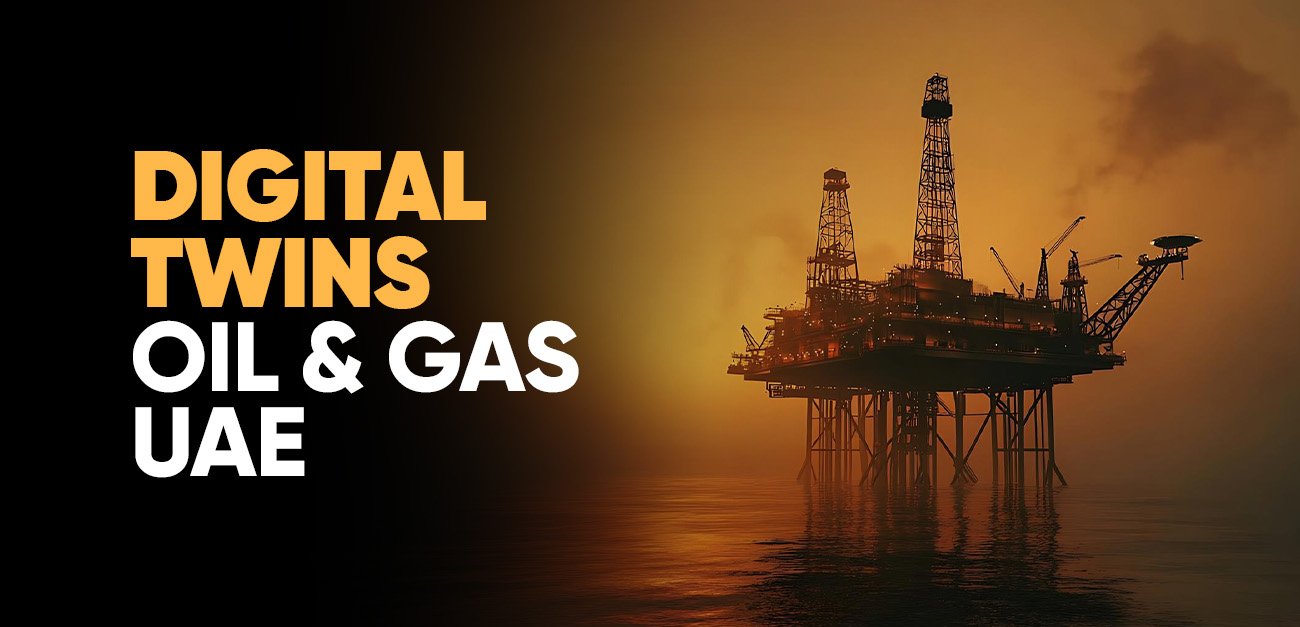
In oil and gas applications, this distinction matters enormously. The digital twin of an offshore platform that incorporates real-time pressure, temperature, flow, and vibration data from hundreds of sensors is a fundamentally different tool from a static 3D model — even if they look similar on a screen.
Four Practical Applications of Digital Twins in UAE Oil & Gas
1. Predictive Maintenance By correlating real-time sensor data with historical failure patterns, digital twins enable predictive maintenance — identifying equipment degradation before it causes failure. For rotating equipment (pumps, compressors, turbines) operating on UAE offshore platforms or refineries, the ability to schedule maintenance based on actual condition rather than fixed time intervals can reduce unplanned downtime by 30–40% and cut maintenance costs significantly.
2. Asset Integrity and Inspection Optimisation Digital twins that integrate inspection data — ultrasonic thickness measurements, visual inspection records, corrosion monitoring results — allow integrity engineers to visualise degradation spatially and over time. Rather than managing inspection data in spreadsheets, engineers can see which sections of a pipeline have the fastest wall loss rate, which vessels are approaching their minimum allowable thickness, and where inspection resources should be focused.
3. Process Optimisation and Simulation Process digital twins — which model the thermodynamic and hydraulic behaviour of production systems — allow engineers to simulate the impact of operational changes before implementing them in the physical plant. For a UAE refinery optimising throughput, the ability to test a proposed operating change digitally before implementation reduces risk and accelerates the pace of improvement.
4. Remote Operations and Monitoring In Dubai’s offshore oil and gas operations — where the cost of personnel helicopter flights, marine vessel support, and site accommodation is substantial — digital twins enable a meaningful reduction in the number of personnel required offshore at any given time. Remote monitoring through a digital twin allows engineers onshore to monitor asset health, review alarm states, and make operational decisions without being physically present offshore.
The ADNOC Digital Transformation Context
ADNOC’s 2023–2027 strategy included explicit commitments to AI, digital twin technology, and smart field development across its asset base. For EPC contractors and engineering service companies operating in the UAE, this creates both a requirement — clients will increasingly specify digital deliverables including connected 3D models and data management platforms — and an opportunity, for those who can demonstrate genuine digital capability.
PetroSpan’s engineering and technical support services include 3D modelling and as-built deliverables that form the foundational layer on which digital twin programmes are built. Understanding how engineering deliverables connect to an operator’s digital twin strategy is increasingly part of the service our clients need from an engineering partner in Dubai.
What to Consider Before Implementing a Digital Twin Programme
The most common mistake in digital twin implementation is focusing on the technology before defining the operational problem it is meant to solve. Before investing in a digital twin platform, UAE operators should be clear on:
- Which assets will be twinned and why — not everything needs a digital twin
- What data exists and what data needs to be created — the quality of a digital twin is entirely dependent on the quality of the data it ingests
- Who will use the twin operationally — a digital twin that sits in a project office and is never consulted by field operations delivers no value
- How it connects to existing CMMS, DCS, and inspection management systems
Conclusion
Digital twins are not a future technology for UAE oil and gas — they are a present operational tool that the most competitive operators and engineering firms are deploying now. For engineering companies and EPC contractors working in Dubai’s energy project environment, developing genuine digital twin capability is increasingly a market differentiator.
Contact PetroSpan to discuss how our engineering services support digital-ready project delivery across Dubai and the UAE.
→ Related: Engineering & Technical Support | Oil & Gas Sector Support


.jpg)