
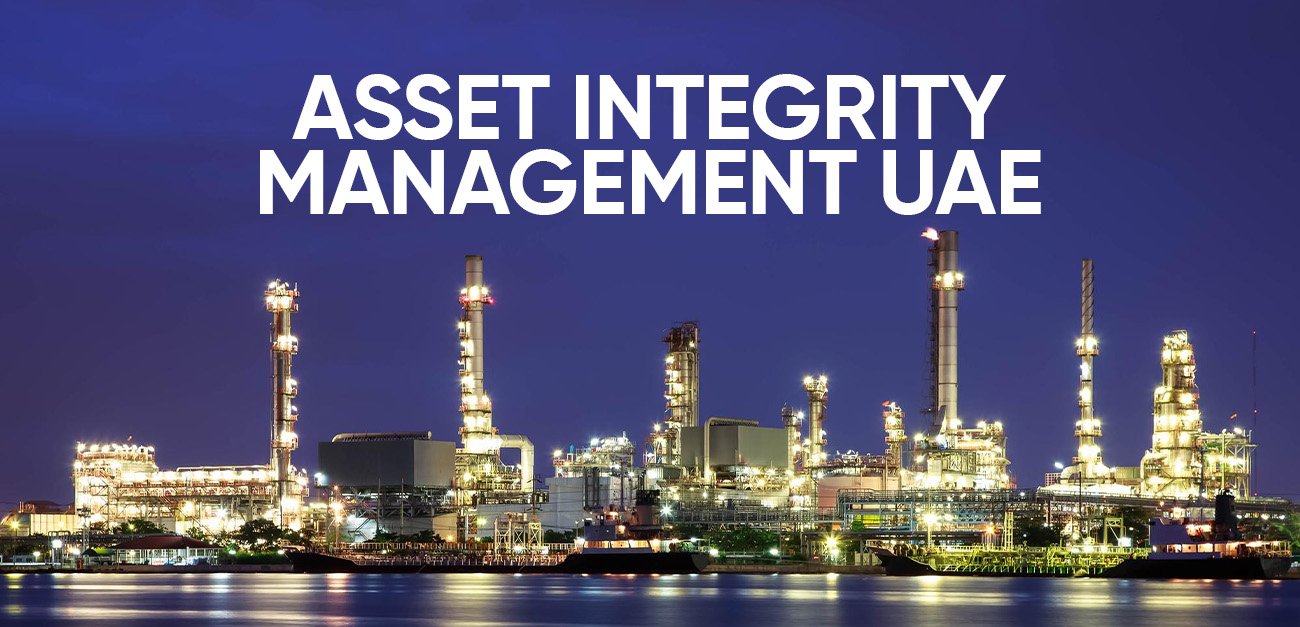
ASSET INTEGRITY MANAGEMENT IN OIL & GAS UAE: WHY IT GOES FAR BEYOND ROUTINE MAINTENANCE
Asset Integrity Management for UAE Oil & Gas — A 2026 Guide
In 2010, the Deepwater Horizon disaster cost BP an estimated $65 billion in cleanup costs, settlements, and penalties. In 2005, the Texas City refinery explosion killed 15 workers and injured 180 others. In both cases, post-incident investigations pointed to the same root cause: systematic failure of asset integrity management.
These are extreme examples, but they illustrate a principle that every oil and gas operator in the UAE understands at a strategic level — and that many still underinvest in at an operational level. Asset integrity is not a maintenance programme. It is not a compliance checkbox. It is the disciplined, data-driven management of an asset’s fitness for service throughout its entire operational life.
For UAE oil and gas operations — where assets include offshore platforms, pipeline networks, refineries, and complex processing facilities operating in one of the world’s most demanding environmental conditions — asset integrity management (AIM) is a business-critical discipline.
Defining Asset Integrity Management
Asset integrity management is the process of ensuring that people, systems, processes, and resources that deliver asset integrity are in place, in use, and are fit for purpose over the full lifecycle of an asset.
This definition, derived from the Energy Institute’s guidelines and international standards including API 580 and API 581, makes an important distinction: AIM is a management system, not a collection of inspection activities.
In practice, AIM for an oil & gas asset in the UAE covers:
- Risk-Based Inspection (RBI) planning — prioritising inspection resources toward highest-risk components
- Corrosion management — monitoring and mitigating metal loss from internal and external degradation
- Pressure system integrity — managing pressure-containing equipment (vessels, pipework, heat exchangers) in line with design codes
- Structural integrity — ensuring topside structures, jacket foundations, and civil infrastructure remain fit for service
- Rotating equipment integrity — managing pumps, compressors, and turbines through condition monitoring and predictive maintenance
- Pipeline integrity management — inline inspection, cathodic protection monitoring, CP surveys, and leak detection
Why UAE Conditions Make AIM Especially Demanding
The UAE’s combination of environmental conditions creates a particularly aggressive integrity challenge for oil and gas assets:
High ambient temperatures — sustained temperatures above 45°C accelerate material degradation, fatigue mechanisms in insulated pipework, and coating failure. The UAE’s summer months create conditions that are significantly more aggressive than those for which many internationally-specified materials were originally designed.
Coastal and offshore salinity — chloride-induced stress corrosion cracking (Cl-SCC) is a major degradation mechanism for stainless steel and susceptible alloys operating in the UAE’s marine environment. Without structured corrosion monitoring, this failure mode is frequently undetected until a leak or structural failure occurs.
Sand and dust — erosion of valves, meters, and rotating equipment components is a persistent maintenance and integrity concern across UAE upstream and midstream operations.
Ageing infrastructure — Dubai Petroleum’s offshore fields have operated since the 1960s. ADNOC’s onshore and offshore infrastructure includes assets that are decades old. For these assets, AIM is not a future-facing discipline — it is a present operational necessity.
The Five Pillars of Effective AIM in UAE Operations
1. A Risk-Based Inspection (RBI) Programme RBI allows inspection resources to be allocated based on the consequence and likelihood of failure — not on fixed time-based schedules. A well-implemented RBI programme, aligned with API 580 and API 581, can significantly reduce unnecessary inspection cost while increasing the probability of detecting degradation before it becomes a failure.
2. Integrity Operating Windows (IOW) IOWs define the operational boundaries within which a process must be maintained to prevent accelerated degradation. Operating outside IOWs — even briefly — can dramatically accelerate corrosion mechanisms and reduce remaining life. Establishing, monitoring, and enforcing IOWs is a foundational element of serious AIM.
3. Fitness for Service (FFS) Assessments When inspection reveals damage — a locally thinned area in a vessel, a dent in a pipeline, or a crack indication in structural steel — an FFS assessment (conducted under API 579 or ASME FFS-1) determines whether the damaged component can continue to operate safely, for how long, and under what conditions. FFS assessments avoid unnecessary shutdowns while quantifying and managing residual life.
4. Corrosion Under Insulation (CUI) Management CUI is one of the highest-consequence integrity threats on any insulated piping or vessel system. In the UAE’s humid coastal environment, water ingress under damaged insulation can cause severe external corrosion in timeframes that are significantly shorter than inspection intervals. A specific CUI programme — including targeted inspection using pulsed eddy current (PEC) or profile radiography — is essential for UAE assets with extensive insulated piping.
5. Integrity Data Management An AIM programme is only as good as its data. Inspection records, thickness measurement histories, repair records, and anomaly logs need to be managed in a structured system that allows trend analysis and informed risk decision-making. Disparate spreadsheets and paper records are incompatible with a credible AIM programme.
The Cost of Getting AIM Wrong
The financial case for asset integrity is straightforward: a properly managed AIM programme consistently demonstrates a return on investment through:
- Avoided unplanned shutdowns (offshore platform downtime in the UAE can cost $500,000–$1,000,000 per day)
- Extended asset life — avoiding premature replacement of expensive pressure vessels, pipelines, and structural components
- Reduced emergency maintenance costs — planned repair is typically 3–5x cheaper than emergency response
- Regulatory compliance — UAE Federal Environmental Law and offshore authority requirements mandate structural and process integrity
PetroSpan’s Approach to Asset Integrity Management
PetroSpan Engineering Solutions provides quality and compliance solutions that include asset integrity support for oil and gas operations across Dubai and the UAE. Our team brings direct experience in offshore and onshore AIM programmes, working within the regulatory frameworks that govern UAE energy operations.
Whether you need a risk-based inspection plan developed for an ageing facility, a corrosion management programme for a coastal pipeline network, or FFS assessments for pressure equipment showing degradation, our team can provide the technical depth and independent perspective your programme needs.
Contact PetroSpan to discuss your asset integrity requirements, or submit your project details for a technical assessment.
→ Related:Quality & Compliance Solutions | Oil & Gas Sector Support


.jpg)